
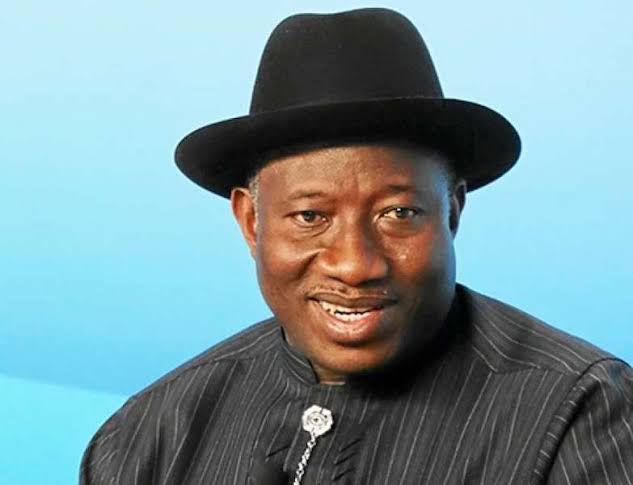

Goodluck Jonathan biography featuring his age, wife, children, education, family background, early life, political career, rise to prominence, presidency, achievements, personal life, and estimated net worth.
Goodluck Jonathan is a Nigerian politician and statesman who served as the President of Nigeria from 2010 to 2015. Before becoming president, he served as Vice President under Umaru Musa Yar’Adua and later became president following Yar’Adua’s death in May 2010. His political career also included serving as Governor of Bayelsa State and Deputy Governor of the state.
Born in Otuoke, Bayelsa State, in the Niger Delta, Jonathan came from a family of canoe makers and grew up in a relatively modest environment. His journey from a small community in the Niger Delta to the highest political office in Nigeria is one of the most notable political stories in the country’s modern history.
During his presidency, Jonathan’s administration focused on areas including education, infrastructure, electoral reform, power generation, and economic development. His time in office also included major political challenges, including the Boko Haram insurgency, security concerns, and intense political competition ahead of the 2015 presidential election.
Jonathan became particularly notable for his decision to concede the 2015 presidential election to Muhammadu Buhari after the results were announced, a move that was widely praised for helping facilitate a peaceful transfer of power. His concession speech and acceptance of the election result became an important part of his political legacy.
After leaving office, Jonathan remained active in international diplomacy and conflict-resolution efforts. Through the Goodluck Ebele Jonathan Foundation and his work with international organizations, he has continued to participate in initiatives focused on democracy, peace, governance, and development.
Highlights of Goodluck Jonathan Biography
Full Name: Goodluck Ebele Azikiwe Jonathan
Date of Birth: November 20, 1957
Age: 68 years (as of 2026)
Place of Birth: Otuoke, Bayelsa State, Nigeria
Nationality: Nigerian
State of Origin: Bayelsa State
Ethnicity: Ijaw
Religion: Christianity
Profession: Politician, Statesman, Zoologist
Political Party: Peoples Democratic Party (PDP)
Political Positions: President of Nigeria, Vice President of Nigeria, Governor of Bayelsa State, Deputy Governor of Bayelsa State
Presidential Tenure: 2010–2015
Marital Status: Married
Wife: Patience Jonathan
Children: Two
Estimated Net Worth: $100 million – $200 million
Goodluck Jonathan Early Life
Goodluck Ebele Azikiwe Jonathan was born on November 20, 1957, in Otuoke, a community in present-day Ogbia Local Government Area of Bayelsa State, Nigeria.
He was born into an Ijaw Christian family in the Niger Delta region, an area known for its extensive network of rivers, creeks, and wetlands.
Jonathan’s father, Lawrence Ebele Jonathan, was a canoe maker and palm-wine tapper, while his mother, Eunice Jonathan, was involved in the family’s home and upbringing.
Growing up in the Niger Delta, Jonathan experienced a childhood that was significantly different from the privileged backgrounds associated with many senior Nigerian politicians.
His early life in Otuoke helped shape his connection to the people and communities of the Niger Delta, a region that would later become central to his political career.
Jonathan’s upbringing also exposed him to the challenges facing communities in the region, including limited infrastructure and access to social amenities.
These experiences later influenced some of the development priorities he emphasized throughout his political career.
Goodluck Jonathan Education
Goodluck Jonathan received his early education in Bayelsa State before proceeding to higher education.
He attended the University of Port Harcourt, where he studied Zoology and earned a Bachelor’s degree.
He continued his studies at the same university, obtaining a Master’s degree in Hydrobiology and Fisheries Biology.
Jonathan later earned a Doctorate (PhD) in Zoology from the University of Port Harcourt.
His academic background is notable because he entered Nigerian politics after establishing himself as an educated professional rather than beginning his career directly within political circles.
Before becoming a full-time politician, he worked in the public sector and gained professional experience that later contributed to his transition into government.
His background in zoology, hydrobiology, and fisheries also reflected the environmental and economic realities of the Niger Delta, where fishing and waterways play important roles in the livelihoods of many communities.
Goodluck Jonathan Family Background
Goodluck Jonathan was born into a modest Ijaw family in Bayelsa State.
His father, Lawrence Ebele Jonathan, was known as a canoe maker and palm-wine tapper. His mother, Eunice Jonathan, was a homemaker.
Jonathan grew up alongside siblings, including his sister Mabel Jonathan, who later became known publicly through her involvement in community and political activities.
His family background has often been highlighted as part of his political story because of the contrast between his humble upbringing and his eventual rise to become President of Nigeria.
His journey from Otuoke to the presidency became an example frequently cited in discussions about social mobility and political advancement in Nigeria.
Goodluck Jonathan Early Professional Career
Before entering politics, Goodluck Jonathan worked in several professional and public-sector positions.
He served as an education inspector and later worked with the Oil Mineral Producing Areas Development Commission (OMPADEC).
His professional experience in the public sector gave him an understanding of government administration and development challenges in the Niger Delta.
These experiences later became useful when he entered politics and began working within the government of Bayelsa State.
Goodluck Jonathan Political Career
Entry Into Politics
Goodluck Jonathan entered partisan politics in the 1990s and became associated with the Peoples Democratic Party (PDP).
His political rise began in Bayelsa State, where he gradually gained recognition within the party and eventually emerged as the running mate to Diepreye Alamieyeseigha in the 1999 gubernatorial election.
The pair won the election, making Jonathan the Deputy Governor of Bayelsa State.
His position as deputy governor marked the beginning of his rise through Nigeria’s political system.
Deputy Governor of Bayelsa State
Jonathan served as Deputy Governor of Bayelsa State from 1999 to 2005.
During this period, he worked within the state government and gained valuable political and administrative experience.
His tenure as deputy governor came to an unexpected end when Governor Diepreye Alamieyeseigha was removed from office following his arrest in the United Kingdom on corruption-related charges.
Jonathan subsequently became Governor of Bayelsa State in December 2005.
Governor of Bayelsa State
Goodluck Jonathan served as governor of Bayelsa State from 2005 to 2007.
His tenure was relatively short, but it provided him with valuable executive experience and increased his standing within the PDP.
His emergence as governor also positioned him for a much larger role in national politics.
In 2007, Jonathan’s political career took a dramatic turn when he was selected as the running mate to Umaru Musa Yar’Adua in the presidential election.
The Yar’Adua-Jonathan ticket won the election, making Jonathan the Vice President of Nigeria.
Vice President of Nigeria
Goodluck Jonathan became Vice President of Nigeria in 2007 under President Umaru Musa Yar’Adua.
His tenure as vice president was initially overshadowed by Yar’Adua’s prolonged illness, which created significant political uncertainty in the country.
As the president’s health deteriorated, Jonathan eventually assumed greater responsibilities within the federal government.
In February 2010, the National Assembly invoked the Doctrine of Necessity, allowing Jonathan to formally assume presidential powers as Acting President.
When President Yar’Adua died on May 5, 2010, Jonathan was sworn in as the President of Nigeria.
This marked a historic moment in his political journey, taking him from a small community in Bayelsa State to the highest office in the country.
Presidency of Nigeria
Goodluck Jonathan became President of Nigeria on May 6, 2010, following the death of President Umaru Musa Yar’Adua.
He later contested the 2011 presidential election as the candidate of the Peoples Democratic Party (PDP) and won, defeating several opposition candidates.
His presidency was defined by efforts to improve infrastructure and public services, but it also faced significant challenges, including insecurity, corruption allegations, economic concerns, and the growing threat posed by Boko Haram.
Economic Development and Infrastructure
Jonathan’s administration pursued several infrastructure and economic development projects during his time in office.
His government focused on improving roads, railways, airports, and power infrastructure, while also attempting to attract investment and diversify the Nigerian economy.
One of the notable projects associated with his administration was the development of Nigeria’s rail transportation system, including the rehabilitation and modernization of railway infrastructure.
His administration also introduced reforms in the agricultural sector, including the Growth Enhancement Support Scheme, which aimed to provide farmers with access to subsidized agricultural inputs.
The government also promoted the development of the agricultural value chain as part of an effort to reduce Nigeria’s dependence on oil.
Education
Education was another area of focus during Jonathan’s presidency.
His administration worked on expanding access to tertiary education and approved the establishment of several new federal universities in different parts of Nigeria.
The government also introduced the Almajiri Education Programme, designed to provide formal education and vocational opportunities to children in northern Nigeria who were traditionally enrolled in Islamic education systems.
Jonathan’s administration also expanded the use of technology in education and supported initiatives aimed at improving access to higher education.
Power Sector Reforms
The electricity sector was one of the major areas of reform under Jonathan.
His administration completed the privatization of several parts of Nigeria’s power sector in 2013, transferring the management of power generation and distribution companies to private investors.
The reform was intended to improve electricity generation and distribution by moving away from complete government control.
Although the reforms were controversial and did not immediately solve Nigeria’s electricity problems, they represented one of the most significant structural changes in the country’s power sector.
Boko Haram Insurgency
Jonathan’s presidency was also heavily affected by the growing Boko Haram insurgency.
The terrorist group’s activities escalated significantly during his time in office, leading to thousands of deaths and widespread displacement.
The 2014 abduction of more than 200 schoolgirls from Chibok became one of the most internationally recognized events of his presidency.
The incident triggered the global #BringBackOurGirls campaign and attracted international attention to the security situation in northeastern Nigeria.
Jonathan’s government’s handling of the insurgency and the Chibok schoolgirls crisis was heavily criticized by opposition politicians, activists, and sections of the public.
The security situation became one of the major issues surrounding the 2015 presidential election.
2015 Presidential Election
Goodluck Jonathan contested the 2015 presidential election as the candidate of the PDP.
His main opponent was Muhammadu Buhari, the candidate of the All Progressives Congress (APC).
The election was closely contested and became one of the most significant elections in Nigeria’s democratic history.
When the results were announced, Buhari was declared the winner.
Jonathan subsequently called Buhari and conceded defeat before the official final declaration, becoming the first incumbent Nigerian president to peacefully concede defeat in a presidential election.
His concession was widely praised in Nigeria and internationally for helping prevent a potentially serious political crisis.
Jonathan later became associated with the statement:
“My ambition is not worth the blood of any Nigerian.”
His decision to accept the result and facilitate a peaceful transition became one of the most important aspects of his political legacy.
Goodluck Jonathan Awards and Recognition
Goodluck Jonathan has received numerous awards and honors during and after his political career.
Some of the notable recognitions associated with him include:
- Grand Commander of the Order of the Federal Republic (GCFR) — Nigeria’s highest national honor, which he received as president.
- African Democracy Medal — recognition associated with his contribution to democratic governance.
- Good Governance and Leadership Awards from various organizations.
- International recognition for peaceful transfer of power following the 2015 Nigerian presidential election.
- African Leadership Magazine recognition for his contribution to democracy and leadership in Africa.
His decision to concede the 2015 election remains one of the most frequently cited reasons for the international recognition he received after leaving office.
Goodluck Jonathan Wife and Children
Goodluck Jonathan is married to Patience Faka Jonathan, a prominent Nigerian political figure and former First Lady of Nigeria.
The couple married in 1993 and have two children, Ariwera and Aruabi.
Patience Jonathan became widely known during her husband’s political career, particularly during his time as governor of Bayelsa State, vice president, and president.
She served as First Lady of Nigeria from 2010 to 2015 and became known for her outspoken personality and involvement in women’s and children’s causes.
The Jonathan family has generally maintained a relatively private personal life despite their prominent position in Nigerian public affairs.
Goodluck Jonathan Personal Life
Outside politics, Goodluck Jonathan is known for maintaining a relatively quiet lifestyle.
He has a strong interest in education, agriculture, environmental issues, and development, areas that reflect his academic and professional background.
He is also known for his connection to his hometown of Otuoke, where he has continued to maintain strong ties.
Following his presidency, Jonathan became increasingly involved in international initiatives focused on democracy, peacebuilding, mediation, and good governance.
He has participated in election-monitoring missions and diplomatic efforts across Africa, using his experience as a former head of state to promote peaceful political transitions.
Goodluck Jonathan Life After the Presidency
After leaving office in 2015, Goodluck Jonathan remained active in African politics and international diplomacy.
He established the Goodluck Ebele Jonathan Foundation, which focuses on democracy, governance, peace, and development.
He has also served as an international election observer and mediator.
Jonathan has participated in efforts to resolve political conflicts and support democratic processes in several African countries.
His post-presidential activities have strengthened his reputation as a former African leader who transitioned from domestic politics into international peace and democracy advocacy.
Goodluck Jonathan’s Estimated Net Worth
Goodluck Jonathan’s estimated net worth is often reported by various online sources to be between $100 million and $200 million.
However, there is no independently verified public figure that establishes his exact personal wealth.
His publicly known sources of income and assets include his long career in government, presidential salary and benefits, investments, and other financial interests.
Because detailed information about his personal assets, investments, properties, and liabilities is not publicly available, any specific net-worth figure should be treated as an estimate rather than a confirmed amount.
Goodluck Jonathan Legacy
Goodluck Jonathan’s political legacy remains a subject of debate in Nigeria.
Supporters point to his role in strengthening democratic institutions, infrastructure development, agricultural reforms, power-sector privatization, and his peaceful concession of the 2015 presidential election.
Critics, however, have raised concerns about the security situation during his presidency, corruption allegations involving government officials, and the handling of the Boko Haram insurgency.
Regardless of these differing opinions, his decision to accept electoral defeat peacefully has become a defining part of his place in Nigeria’s democratic history.
His journey from Otuoke in Bayelsa State to becoming President of Nigeria also remains one of the country’s most notable political success stories.
Conclusion
Goodluck Jonathan’s biography is the story of a politician who rose from a modest background in the Niger Delta to become one of Nigeria’s most prominent political leaders.
With a background in zoology and environmental sciences, Jonathan initially built a career outside frontline politics before entering government and gradually rising through the political ranks.
He served as Deputy Governor and Governor of Bayelsa State, Vice President of Nigeria, and eventually President of Nigeria from 2010 to 2015.
His presidency was marked by infrastructure and economic reforms, but also by major challenges involving insecurity, Boko Haram, corruption concerns, and political opposition.
His peaceful concession of the 2015 presidential election remains his most internationally recognized contribution to Nigeria’s democratic development.
Since leaving office, Jonathan has continued to contribute to African politics through election observation, mediation, and democracy-focused initiatives.
Today, Goodluck Jonathan remains an influential figure in Nigerian and African political affairs, with his legacy continuing to generate discussion about leadership, democracy, governance, and peaceful transitions of power.
FAQs About Goodluck Jonathan
How old is Goodluck Jonathan?
Goodluck Jonathan was born on November 20, 1957, making him 68 years old as of 2026.
Where is Goodluck Jonathan from?
He is from Otuoke in Ogbia Local Government Area of Bayelsa State, Nigeria.
What did Goodluck Jonathan study?
He studied Zoology at the University of Port Harcourt before earning a master’s degree in Hydrobiology and Fisheries Biology and a PhD in Zoology.
Who is Goodluck Jonathan’s wife?
His wife is Patience Faka Jonathan, who served as First Lady of Nigeria from 2010 to 2015.
How many children does Goodluck Jonathan have?
Goodluck and Patience Jonathan have two children.
When was Goodluck Jonathan president?
He served as President of Nigeria from 2010 to 2015.
Which political party did Goodluck Jonathan belong to?
He was a prominent member of the Peoples Democratic Party (PDP).
Who defeated Goodluck Jonathan in the 2015 election?
Muhammadu Buhari, the candidate of the All Progressives Congress (APC), defeated Jonathan in the 2015 presidential election.
Why is Goodluck Jonathan famous?
He is best known for serving as President of Nigeria, his rise from Bayelsa State politics to the presidency, and his peaceful concession of the 2015 presidential election.
What is Goodluck Jonathan’s estimated net worth?
His estimated net worth is often placed between $100 million and $200 million, although his exact personal wealth has not been independently verified.


I still don’t get why he is coming out for next election, out of no where. Hmm, think about your Legacy