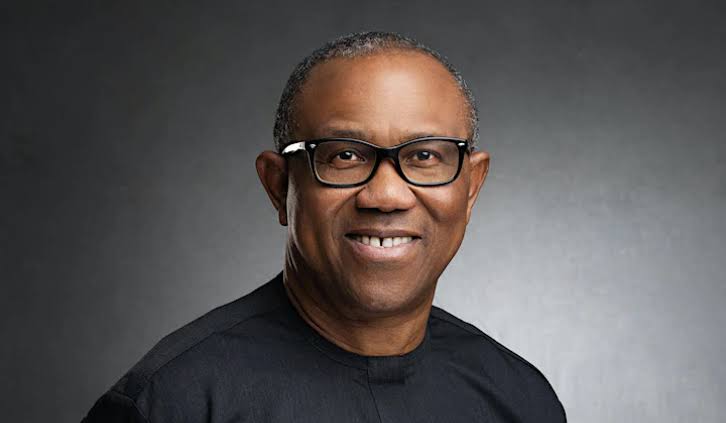

Peter Obi biography featuring his age, wife, children, education, family background, early life, business career, political career, rise to prominence, presidential campaigns, personal life, achievements, awards and recognition, and estimated net worth.
Peter Gregory Obi is a Nigerian politician and businessman who served as the Governor of Anambra State from 2006 to 2013 and later became the Labour Party’s presidential candidate in the 2023 Nigerian general election. His reputation for emphasizing fiscal responsibility, public-sector efficiency, and economic development has made him one of Nigeria’s most prominent contemporary political figures.
Born in Onitsha, Anambra State, Obi built his career in the private sector before entering politics. He worked in the banking industry and held senior positions at several financial institutions before becoming a major political figure in southeastern Nigeria.
His political career began with his ambition to become governor of Anambra State. Although he initially lost the 2003 governorship election, he successfully challenged the result in court and was eventually sworn in as governor in March 2006. His first tenure was interrupted when he was removed from office, but the courts later reinstated him, allowing him to complete his term.
As governor, Obi became known for his approach to government finances, investment in education and healthcare, and efforts to strengthen the state’s financial position. His administration also attracted attention for reportedly saving and investing state funds rather than relying entirely on immediate spending.
After leaving office, Obi joined the People’s Democratic Party (PDP) and served as the running mate to Atiku Abubakar in the 2019 presidential election. He later left the PDP and joined the Labour Party, where he became its presidential candidate for the 2023 presidential election. His campaign, which attracted significant support among young Nigerians and first-time voters, became popularly associated with the “Obidient” movement.
Related: Goodluck Jonathan Biography
Highlights of Peter Obi Biography
Full Name: Peter Gregory Obi
Date of Birth: July 19, 1961
Age: 65 years (as of 2026)
Place of Birth: Onitsha, Anambra State, Nigeria
Nationality: Nigerian
State of Origin: Anambra State
Ethnicity: Igbo
Religion: Christianity
Profession: Politician, Businessman
Current Political Party: Nigeria Democratic Congress (NDC)
Previous Political Parties: Labour Party (LP), People’s Democratic Party (PDP), All Progressives Grand Alliance (APGA)
Major Political Position: Governor of Anambra State
Governorship: 2006–2013
2023 Presidential Party: Labour Party (LP)
Marital Status: Married
Wife: Margaret Brownson Usen
Children: Two
Estimated Net Worth: $10 million – $20 million
Peter Obi Early Life
Peter Gregory Obi was born on July 19, 1961, in Onitsha, Anambra State, Nigeria.
He was raised in a business-oriented family and grew up in southeastern Nigeria during a period of significant political and social change.
Obi developed an early interest in business and public affairs, which later influenced his career choices. Unlike many Nigerian politicians who began their careers directly within government, he first established himself in the private sector.
His early experiences in business and finance later influenced his approach to public administration, particularly his emphasis on financial management and accountability during his time as governor.
Peter Obi Education
Peter Obi received his early education in Nigeria before pursuing higher education.
He attended Christ the King College, Onitsha, where he completed his secondary education.
He later gained admission to the University of Nigeria, Nsukka (UNN), where he studied Philosophy and graduated in 1984.
After completing his undergraduate education, Obi pursued further studies at several institutions in Nigeria and abroad.
His academic background includes executive and professional programmes at institutions such as:
- Cambridge University
- Oxford University
- London School of Economics and Political Science
- Columbia Business School
- Harvard Business School
- European Institute of Business Administration (INSEAD)
- George Business School, University of Cambridge
His extensive educational background, particularly in business and management, complemented his experience in the financial sector before he entered politics.
Peter Obi Family Background
Peter Obi comes from an Igbo family from Anambra State.
He was raised in Onitsha, one of southeastern Nigeria’s major commercial centers, an environment that exposed him to business and commerce from an early age.
Obi is married to Margaret Brownson Usen, and the couple have two children.
His family has largely remained outside the political spotlight, with Obi generally keeping his private and family life separate from his public career.
His wife has occasionally appeared alongside him at public events, but she maintains a relatively low profile compared with the spouses of many Nigerian politicians.
Peter Obi Business Career
Before entering politics, Peter Obi built a successful career in the banking and financial services industry.
He held senior positions in several Nigerian financial institutions and gained extensive experience in corporate management, investment, and financial administration.
Some of the institutions associated with his professional career include Fidelity Bank, where he served as chairman, as well as other major financial organizations.
His experience in banking gave him a strong understanding of financial management and corporate governance.
Obi’s private-sector career later became an important part of his political identity. During his governorship, he frequently emphasized the importance of reducing government waste, maintaining fiscal discipline, and investing public resources in areas that could produce long-term benefits.
Peter Obi Political Career
Entry Into Politics
Peter Obi entered active politics in the early 2000s after deciding to contest for the governorship of Anambra State.
He ran for governor in the 2003 Anambra State governorship election under the platform of the All Progressives Grand Alliance (APGA).
The election was highly controversial, and Obi challenged the result in court.
After a prolonged legal battle, the courts eventually ruled in his favor.
Governor of Anambra State
Peter Obi was sworn in as Governor of Anambra State on March 17, 2006.
His first tenure was short-lived, however, as he was removed from office later that year following political developments within the state.
Obi challenged his removal and eventually returned to office after the courts ruled that his tenure had been unlawfully interrupted.
He resumed as governor in 2007 and remained in office until 2013, becoming one of the longest-serving governors in the state’s history.
During his tenure, Obi focused heavily on education, healthcare, infrastructure, financial management, and public-sector reforms.
Education and Healthcare
Education became one of the key areas of focus during Obi’s administration.
His government invested in schools and provided support for educational institutions across Anambra State.
His administration also supplied equipment and other resources to schools and healthcare facilities, with the aim of improving the quality of public services.
He was particularly associated with investments in primary and secondary education, as well as efforts to improve healthcare infrastructure.
Financial Management
One of the most discussed aspects of Peter Obi’s time as governor was his approach to state finances.
His administration emphasized saving and investing public funds, and Anambra State became known for maintaining significant financial reserves during his tenure.
Supporters praised this approach as evidence of fiscal discipline, while critics argued that excessive saving could limit the speed of infrastructure development.
Nevertheless, his financial management style became one of the defining features of his political reputation and later became a central part of his presidential campaign messaging.
2019 Presidential Election
After completing his second term as governor in 2013, Peter Obi remained active in national politics.
He joined the People’s Democratic Party (PDP) and became one of the party’s prominent figures.
In the 2019 presidential election, Obi was selected as the running mate to Atiku Abubakar, the PDP’s presidential candidate.
The Atiku-Obi ticket contested against the incumbent president, Muhammadu Buhari, and his running mate, Yemi Osinbajo, of the All Progressives Congress (APC).
The APC ticket won the election, while Atiku and Obi remained prominent opposition figures.
The experience gave Obi greater national visibility and introduced him to a much broader audience beyond southeastern Nigeria.
Peter Obi Move to the Labour Party
In 2022, Peter Obi left the PDP and joined the Labour Party.
His decision came after he withdrew from the PDP’s presidential primary, where Atiku Abubakar eventually emerged as the party’s candidate.
Obi subsequently became the Labour Party’s presidential candidate for the 2023 Nigerian presidential election.
His candidacy quickly attracted substantial support, particularly among young Nigerians and urban voters.
The 2023 Presidential Campaign
Peter Obi’s 2023 presidential campaign became one of the most talked-about political movements in Nigeria.
His campaign focused heavily on issues such as:
- Economic reform
- Reducing government waste
- Improving security
- Education
- Healthcare
- Job creation
- Human capital development
- Production over consumption
He frequently argued that Nigeria needed to move away from dependence on oil and develop a more productive economy driven by manufacturing, agriculture, technology, and human capital.
His campaign slogan, “Go and Verify,” became widely associated with his emphasis on data, statistics, and evidence-based claims.
The “Obidient” Movement
One of the most notable aspects of Peter Obi’s 2023 campaign was the emergence of the “Obidient” movement.
The term was used to describe supporters of Obi, many of whom were young Nigerians who actively promoted his campaign on social media and organized rallies across the country.
The movement became particularly influential online, where supporters used social media platforms to promote Obi’s political message and encourage voter participation.
His support base extended beyond the traditional political structures of the Labour Party and included many young professionals, first-time voters, and Nigerians in the diaspora.
The movement also helped increase the Labour Party’s visibility at the national level.
2023 Presidential Election
In the February 2023 presidential election, Peter Obi contested against Bola Ahmed Tinubu of the APC and Atiku Abubakar of the PDP.
According to the official results announced by the Independent National Electoral Commission (INEC), Bola Tinubu won the election, followed by Atiku Abubakar, while Peter Obi finished third.
Obi and his supporters disputed the outcome and challenged the result through the courts.
The legal challenge eventually reached the Supreme Court, which upheld Tinubu’s victory.
Despite finishing third, Obi’s performance was historically significant for the Labour Party. He won 12 states and the Federal Capital Territory (FCT), making the party a major force in Nigerian national politics.
Peter Obi Awards and Recognition
Peter Obi has received various awards and recognitions throughout his career, particularly for his contributions to governance, leadership, and public administration.
Some of the recognitions associated with him include:
- Zik Prize for Leadership — recognition linked to his leadership and public service.
- Silverbird Man of the Year Award — recognition for his public service and political leadership.
- Sun Newspaper Man of the Year Award — recognition for his contributions to governance.
- Leadership Newspaper Governor of the Year Award — recognition of his performance as governor of Anambra State.
- Various honors from professional organizations and civil society groups for his approach to public administration and fiscal responsibility.
His supporters have particularly highlighted his reputation for financial discipline and his record of investment in education and healthcare.
Peter Obi Wife and Children
Peter Obi is married to Margaret Brownson Usen.
The couple have two children, a son and a daughter.
His wife has generally maintained a low public profile compared with many political spouses in Nigeria.
Peter Obi has also kept his children largely away from political controversies and public attention, although they have occasionally appeared with him at public events.
Peter Obi Personal Life
Despite his high-profile political career, Peter Obi is known for maintaining a relatively private personal life.
He is often described as having a modest public lifestyle compared with some other Nigerian politicians.
His public image has been strongly associated with simplicity, financial prudence, and accountability.
Obi is also known for his interest in education, economic development, business, and public policy.
Since leaving office as governor, he has remained active in political discussions and frequently speaks about Nigeria’s economic and social challenges.
Peter Obi’s Estimated Net Worth
Peter Obi’s estimated net worth is often placed between $10 million and $20 million.
However, there is no independently verified public figure that establishes his exact personal wealth.
His wealth is generally associated with his long career in the banking and financial services sector, business interests, investments, and his years in public service.
Because detailed information about his private investments, properties, and liabilities is not fully available publicly, any specific net-worth figure should be regarded as an estimate rather than a confirmed amount.
Peter Obi Controversies and Criticism
Like other prominent Nigerian politicians, Peter Obi has faced criticism and controversy throughout his career.
Some critics have questioned aspects of his record as governor, including his financial policies and certain claims made about his administration’s achievements.
His supporters, however, argue that his record demonstrates responsible financial management and effective use of public resources.
His 2023 presidential campaign also generated intense political debate, particularly around election results, social media activism, and the role of the “Obidient” movement in Nigerian politics.
Obi’s supporters challenged the 2023 election results in court, but the Supreme Court ultimately upheld the election of Bola Ahmed Tinubu.
Peter Obi Political Legacy
Peter Obi’s political legacy is closely connected to his tenure as governor of Anambra State and his emergence as a major figure in Nigeria’s opposition politics.
As governor, he developed a reputation for emphasizing fiscal responsibility, education, healthcare, and long-term investment.
His 2023 presidential campaign also changed the dynamics of Nigerian politics by demonstrating the potential influence of young voters and social media-driven political movements.
The rise of the “Obidient” movement helped transform the Labour Party from a relatively minor political party into a significant national political force.
Regardless of differing opinions about his political record, Peter Obi remains one of Nigeria’s most influential contemporary opposition politicians.
Conclusion
Peter Obi’s biography is the story of a businessman who transitioned into politics and became one of Nigeria’s most prominent modern political figures.
Born in Onitsha, Anambra State, he built a successful career in banking and business before entering politics.
His tenure as Governor of Anambra State established his reputation for fiscal discipline and investments in education, healthcare, and infrastructure.
After serving as Atiku Abubakar’s running mate in the 2019 presidential election, Obi joined the Labour Party and contested the 2023 presidential election.
Although he did not win the election, his campaign attracted millions of supporters and gave rise to the influential “Obidient” movement, particularly among young Nigerians.
Today, Peter Obi remains an important figure in Nigerian politics, continuing to advocate for economic reform, accountable governance, human capital development, and greater efficiency in public administration.
FAQs About Peter Obi
How old is Peter Obi?
Peter Obi was born on July 19, 1961, making him 65 years old as of 2026.
Where is Peter Obi from?
He is from Onitsha in Anambra State, Nigeria.
What did Peter Obi study?
He studied Philosophy at the University of Nigeria, Nsukka, graduating in 1984.
Who is Peter Obi’s wife?
His wife is Margaret Brownson Usen.
How many children does Peter Obi have?
Peter Obi and his wife have two children.
Was Peter Obi a governor?
Yes. He served as Governor of Anambra State from 2006 to 2013, with an interruption in his tenure following his removal from office before being reinstated by the courts.
Which political party did Peter Obi belong to during the 2023 presidential election?
Peter Obi contested the 2023 presidential election as the Labour Party’s presidential candidate.
Did Peter Obi contest the 2023 presidential election?
Yes. He contested the 2023 presidential election as the Labour Party’s presidential candidate.
Who won the 2023 Nigerian presidential election?
Bola Ahmed Tinubu of the All Progressives Congress (APC) was declared the winner.
What is Peter Obi’s current political party?
Peter Obi’s political affiliation has changed since his 2023 Labour Party candidacy. His current political affiliation should be checked against the latest official announcement when publishing, as political alliances and party memberships can change.
What is Peter Obi’s estimated net worth?
His estimated net worth is often placed between $10 million and $20 million, although his exact wealth has not been independently verified.